
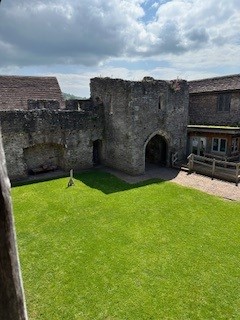
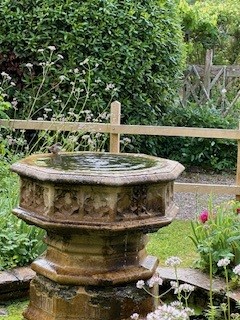
Tretower Court and Castle, located in the village of Tretower in Powys, Wales, is a site of significant historical and architectural interest. The site comprises a medieval castle and a grand manor house, both of which reflect the evolution of Welsh defensive and domestic architecture from the 12th to the 17th centuries.
Tretower Castle
The original Tretower Castle was built around the early 12th century by a Norman knight named Picard, a follower of Bernard de Neufmarché, who was a prominent figure in the Norman conquest of South Wales. The castle initially consisted of a simple motte-and-bailey design, which was common for Norman fortifications of that period. It featured a wooden keep on a raised earthwork (motte) and an enclosed courtyard (bailey) surrounded by a palisade.
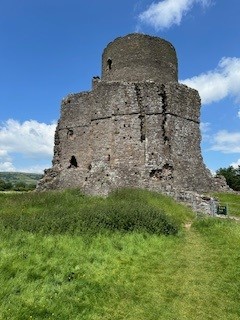
In the late 12th century, the wooden keep was replaced by a more substantial stone shell keep, which was a circular stone wall with a wooden interior structure. This stone keep, which still stands today, is one of the best-preserved examples in Wales. Over time, the castle was further fortified with additional stone walls, a gatehouse, and a moat, reflecting the increasing need for robust defences during periods of conflict, particularly during the Welsh-English wars.
Tretower Court
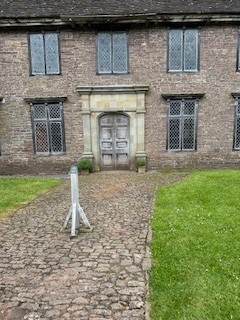
Adjacent to the castle, Tretower Court represents the evolution from medieval fortress to comfortable residence. The transformation began in the late 14th century when Sir James Berkeley, who had inherited Tretower through marriage, decided to construct a new manor house. This house was built adjacent to the old castle, using some of its stone and occupying part of its outer ward.
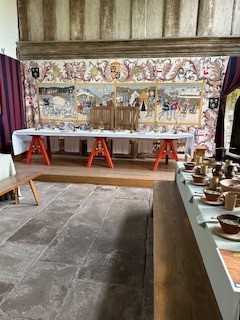
Tretower Court is a fine example of a late medieval manor house, and its architecture reveals much about the changing tastes and lifestyles of the gentry during the period. The house is built around a courtyard and features a great hall, solar (private family quarters), and several service rooms. The great hall, in particular, is notable for its large timber roof and impressive fireplace, designed to provide warmth and display the wealth and status of the owner.
In the 15th century, the Vaughan family, who acquired Tretower through marriage, made significant additions and alterations. They extended the living quarters and added decorative features that reflected the wealth and status of the family. The Vaughan era saw Tretower Court become a hub of social and economic activity, with the estate hosting numerous events and gatherings.
Restoration and Preservation
By the 18th century, Tretower Court and Castle had fallen into disrepair, and parts of the estate were used for agricultural purposes. However, the historical significance of the site was recognised in the 20th century, leading to efforts to preserve and restore the buildings. The site is now managed by Cadw, the Welsh Government’s historic environment service, which has undertaken extensive restoration work to preserve both the castle and the court for future generations.
Today, Tretower Court and Castle is open to the public and serves as a window into medieval and early modern life in Wales. Visitors can explore the well-preserved keep, the great hall, and the beautifully restored gardens, which have been replanted with species that would have been grown in the medieval period. Educational displays and interactive exhibits provide insights into the history and daily life of the inhabitants.
Cultural Significance
Tretower Court and Castle hold a special place in Welsh cultural heritage. The site has been used for various cultural events, including re-enactments, medieval fairs, and educational programmes that bring history to life. Its picturesque setting and historical ambiance have also made it a popular location for film and television productions, adding to its cultural resonance.
Visit their web site to find out more Tretower Court and Castle | Cadw (gov.wales)
Stay with us
Stay with us at Goyte Hall to get the most of your visit. Our suites have been recently restored and refurbished to an excellent standard.